
For instance, the SE series from iPhone was specially designed to attract people who want budget-friendly devices. Before that, Apple used to be an exclusive for sophisticated users. XIAOMI POCO X3 NFC body design is elegant with full screen 6.67 inches protected by Corning Gorilla Glass 5, back body use plastic and rounded with aluminium frame. We can use Infra Red (IR) features to make it work as remote control.
- I didn’t see any spam notifications during my usage, and the UI is well-optimized for the hardware.
- The ultrawide camera performance isn’t good at night so best to steer clear of it.
- The Poco X3 Pro is also surprisingly capable in low light situations as it offers a night mode too.
- The power button, on the other hand, doubles up as a fingerprint scanner.
The power button is another sore point as it’s mushy and cheap feeling. Luckily, the recessed power button has a fingerprint scanner that is very fast and accurate. It’s a trade-off that works on many other cheap smartphones, and the same can be said here. The main camera on the Poco X3 Pro supports up to 4K 30FPS video recording with Electronic Image Stabilization (EIS) to improve the stability and smoothness of the video. Videos from the phone look accurate, with good contrast, and are stable thanks to EIS. Audio recording also is very good given the price and hardware on offer.
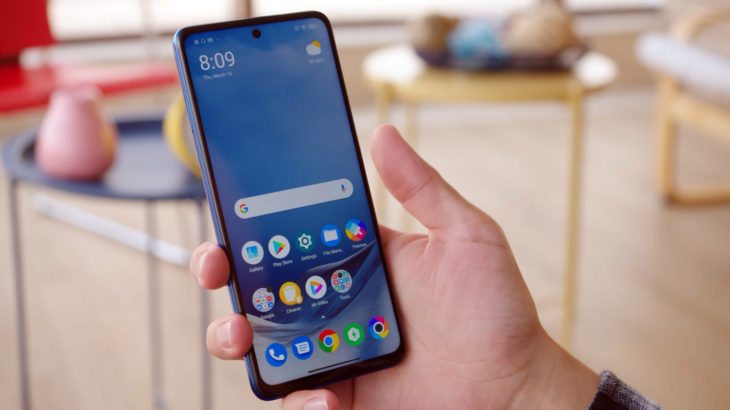
It’s still a stock ROMs solid LCD that benefits massively with the higher refresh rate. If you like the Poco X3 NFC’s chunky hardware, then you’ll be right at home with the X3 Pro. Xiaomi has just added or tweaked a few small areas for an overall design that is instantly familiar but simultaneously feels slightly better for it. The chassis remains mainly polycarbonate, which should mean that daily abuse won’t prove an issue — especially as adding a case makes this “thicc” phone even thicker. Xiaomi has always been on top of its game when it comes to battery. And looking at the specs of the Poco X3 Pro, I am willing to bet that it will fare well in my battery tests.
- While Poco X3 Pro comes with a 33W wired charger, Poco X4 Pro has a faster 67W wired charger with support for PD3.0 and QC3.
- Xiaomi has just added or tweaked a few small areas for an overall design that is instantly familiar but simultaneously feels slightly better for it.
- The updater app does not support upgrades from one version of LineageOS to another, and will block installation to any update for a different version.
- Binge watching Prime, Netflix & History TV are my hobbies.
- Here you can Download and install Xiaomi Poco X3 Pro Android Phone device USB (Universal Serial Bus) drivers for free.
There is a big difference when switching over to 120Hz, but there is noticeable ghosting at times. Xiaomi offers plenty of customizability for the panel, and you can change the color balance, schedule dark mode, and use the text-focused reading mode. The POCO X3 stood out last year because it introduced an original design and wasn’t a rebranded Redmi phone. Xiaomi is reusing the design here, and the POCO X3 Pro doesn’t differ from the standard version on the design front. You still get a large phone with a massive battery, and the POCO branding at the back is just as prominent. With dimensions of 165.3 x 76.8 x 9.4mm and a weight of 215g, the X3 Pro is one of the largest and heaviest phones in this category. POCO is also set to kick off sales of the X3 Pro in the UK and other European markets in the coming weeks.